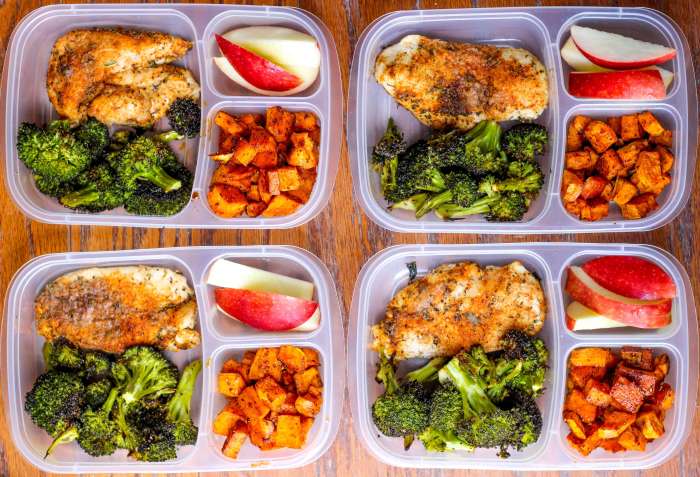
Balanced diet meal prep ideas for the week bring a fresh perspective on healthy eating, offering a range of recipes and tips to kickstart your wellness journey. From the importance of meal prepping to creative storage solutions, this guide has you covered.
Balanced Diet Meal Prep Ideas for the Week
Meal prepping is an essential tool for maintaining a healthy lifestyle, as it allows you to plan ahead and ensure you have nutritious meals ready to go throughout the week. By preparing balanced meals in advance, you can save time, money, and make healthier choices.
Here are five easy and nutritious recipes for a balanced diet meal prep:
Recipe 1: Quinoa Salad with Roasted Vegetables
- Cook quinoa according to package instructions and let it cool.
- Roast a variety of vegetables such as bell peppers, zucchini, and cherry tomatoes with olive oil, salt, and pepper.
- Mix the quinoa and roasted vegetables together, drizzle with a lemon vinaigrette, and top with feta cheese.
Recipe 2: Baked Lemon Herb Chicken with Sweet Potatoes, Balanced diet meal prep ideas for the week
- Marinate chicken breasts in lemon juice, olive oil, garlic, and herbs.
- Bake the chicken in the oven until cooked through.
- Roast sweet potatoes with olive oil, salt, and pepper until tender.
- Divide the chicken and sweet potatoes into meal prep containers for easy lunches or dinners.
Recipe 3: Lentil and Vegetable Stew
- Sauté onions, carrots, celery, and bell peppers in a pot until softened.
- Add lentils, vegetable broth, canned tomatoes, and seasonings like cumin and paprika.
- Simmer the stew until the lentils are tender and the flavors have melded together.
- Divide the stew into portions and enjoy throughout the week.
Recipe 4: Salmon and Asparagus Foil Packets
- Place salmon fillets and asparagus spears on a sheet of foil.
- Drizzle with olive oil, lemon juice, garlic, and dill.
- Wrap the foil into packets and bake in the oven until the salmon is cooked.
- Pair with a side of quinoa or brown rice for a complete meal prep option.
Recipe 5: Turkey and Black Bean Lettuce Wraps
- Cook ground turkey with taco seasoning until browned.
- Add black beans, corn, and diced tomatoes to the turkey mixture.
- Spoon the turkey mixture into lettuce leaves and top with avocado and salsa.
- Roll up the lettuce wraps and pack them for a nutritious and low-carb meal prep option.
By incorporating a variety of food groups into your meal preps, you can ensure you’re getting a wide range of nutrients and flavors. Remember to include lean proteins, whole grains, plenty of fruits and vegetables, and healthy fats in your recipes.
Storing your meal preps properly is also crucial to maintaining freshness throughout the week. Consider using airtight containers, glass jars, or freezer-safe bags to keep your meals tasting great until you’re ready to enjoy them.
Mental Wellness and Balanced Diet
When it comes to mental wellness, a balanced diet plays a crucial role in maintaining and improving overall mental health. The foods we consume have a direct impact on our brain function, mood, and cognitive abilities.
Connection Between Food and Mental Health
Consuming a variety of nutrient-dense foods such as fruits, vegetables, whole grains, lean proteins, and healthy fats can positively impact mental health. These foods provide essential vitamins, minerals, antioxidants, and omega-3 fatty acids that support brain health and reduce inflammation, which is linked to mood disorders.
Meal Prepping for Mental Well-being
Meal prepping ensures that you have access to nutritious meals throughout the week, reducing the temptation to opt for unhealthy fast food or processed meals. Planning and preparing balanced meals in advance can alleviate stress, save time, and promote a sense of control over your diet, leading to improved mental well-being.
Mood-Boosting Ingredients to Include
- Omega-3 fatty acids found in fatty fish like salmon and walnuts can help reduce symptoms of depression and anxiety.
- Dark leafy greens such as spinach and kale are rich in folate, which is important for mood regulation.
- Berries like blueberries and strawberries are packed with antioxidants that protect the brain from oxidative stress and may improve cognitive function.
- Probiotic-rich foods like yogurt and kefir can support gut health, which is linked to mood and mental health.
- Nuts and seeds contain magnesium and zinc, which are essential for neurotransmitter function and can help regulate mood.
Physical Fitness and Nutrition
Eating a balanced diet is crucial for supporting physical fitness goals as it provides the necessary nutrients to fuel workouts, aid in muscle recovery, and optimize performance.
Pre and Post-Workout Meal Prep Ideas
- Pre-Workout: Opt for a combination of complex carbohydrates and lean proteins for sustained energy. Examples include oatmeal with berries, Greek yogurt with granola, or a turkey and avocado wrap.
- Post-Workout: Focus on replenishing glycogen stores and repairing muscle tissue with a mix of protein and carbohydrates. Consider options like a chicken quinoa bowl, a smoothie with protein powder and fruits, or a salmon and sweet potato salad.
Importance of Protein, Carbs, and Fats in a Fitness-Focused Diet
Protein is essential for muscle repair and growth, while carbohydrates provide energy for workouts and replenish glycogen stores. Healthy fats support hormone production and aid in nutrient absorption.
Tips for Balancing Macros in Meal Preps for Physical Activity
- Calculate your protein needs based on your activity level and body weight to ensure adequate muscle repair and growth.
- Incorporate complex carbohydrates like whole grains, fruits, and vegetables to fuel workouts and support recovery.
- Choose healthy fats from sources like avocados, nuts, and olive oil to promote overall health and enhance nutrient absorption.
Adequate Hydration and Meal Prep
Staying hydrated is crucial for overall health as water plays a vital role in various bodily functions such as digestion, circulation, and temperature regulation. Dehydration can lead to fatigue, headaches, and even impair cognitive function. Therefore, it is essential to prioritize hydration alongside meal prepping to ensure optimal well-being.
Creative Infused Water Ideas
Infusing water with fruits, herbs, or vegetables can add flavor and encourage increased water consumption. Here are some creative ideas for infused water:
- Strawberry and Mint
- Cucumber and Lemon
- Watermelon and Basil
- Orange and Blueberry
Incorporating Hydrating Foods into Meal Preps
Include hydrating foods in your meal preps to boost hydration levels. Some examples of hydrating foods are:
| Fruits | Vegetables |
|---|---|
| Watermelon | Cucumbers |
| Oranges | Tomatoes |
| Berries | Spinach |
Tips for Planning Hydration with Meal Prepping
- Start your day with a glass of water before each meal.
- Carry a reusable water bottle with you to stay hydrated throughout the day.
- Include hydrating snacks like celery sticks or grapefruit in your meal preps.
- Set reminders or use apps to track your water intake and ensure you meet your daily hydration goals.
Regular Exercise and Nutrient-Rich Diet
Regular exercise and a nutrient-rich diet go hand in hand when it comes to achieving optimal health and fitness goals. By fueling your body with the right nutrients, you can enhance your exercise performance, support muscle recovery, and maintain high energy levels throughout your workouts.
Meal Prep Ideas for Muscle Recovery and Energy Levels
- Include lean protein sources such as grilled chicken, turkey, or tofu in your meal preps to support muscle repair and growth.
- Incorporate complex carbohydrates like quinoa, sweet potatoes, and brown rice to provide sustained energy for your workouts.
- Add healthy fats from foods like avocados, nuts, and seeds to help reduce inflammation and support overall health.
Role of Micronutrients in Enhancing Exercise Performance
Micronutrients play a crucial role in optimizing exercise performance by aiding in various physiological processes within the body. For example, iron is essential for oxygen transport, while magnesium helps with muscle function and energy production.
Examples of Workout Fuel Snacks in Meal Preps
- Trail mix with nuts and dried fruits for a quick energy boost before a workout.
- Greek yogurt with berries and a drizzle of honey for a protein-packed snack post-exercise.
- Whole grain crackers with hummus for a satisfying combination of carbohydrates and protein to refuel after a workout.
Stress Management Through Nutrition
When it comes to managing stress, the role of nutrition is often overlooked. However, what we eat can have a significant impact on our stress levels and overall mental well-being.A balanced diet plays a crucial role in reducing stress and anxiety.
Certain nutrients, such as complex carbohydrates, omega-3 fatty acids, vitamins, and minerals, can help regulate mood and promote relaxation. Including these nutrients in your meals can help you better cope with stress.
Relaxation-Promoting Ingredients
- Omega-3 fatty acids found in fatty fish like salmon and walnuts can help reduce inflammation in the brain, improving mood and reducing stress levels.
- Foods rich in magnesium, such as spinach, almonds, and avocados, can help relax muscles and promote overall relaxation.
- Green tea contains an amino acid called L-theanine, which has calming effects on the brain and can help reduce stress and anxiety.
Mindful Eating Practices for Stress Relief
- Practice mindful eating by focusing on the sensory experience of each bite, such as the taste, texture, and aroma of the food. This can help you stay present and reduce stress.
- Avoid distractions while eating, such as watching TV or using your phone, to fully engage with your meal and prevent mindless overeating due to stress.
- Chew your food slowly and savor each bite, allowing your body to properly digest the nutrients and signal feelings of satisfaction, reducing stress-induced cravings.
Preventive Care and Proper Nutrition
Proper nutrition is essential for preventive care as it helps in maintaining overall health and reducing the risk of chronic diseases. A balanced diet rich in essential nutrients, antioxidants, and vitamins plays a crucial role in boosting the immune system and protecting the body from illnesses.
Role of Antioxidants and Vitamins
Antioxidants help in neutralizing harmful free radicals in the body, which can cause cell damage and lead to various diseases. Vitamins, on the other hand, are essential for the proper functioning of the immune system and overall health. Including foods high in antioxidants like berries, nuts, and leafy greens, as well as vitamin-rich foods like citrus fruits, can help in preventing illnesses and promoting well-being.
Meal Prep Ideas for Immune System Boost
- Prepare a vegetable stir-fry with bell peppers, broccoli, and spinach for a dose of vitamins and antioxidants.
- Make a fruit salad with berries, kiwi, and oranges for a refreshing and nutritious snack.
- Include turmeric, garlic, and ginger in your meals for their anti-inflammatory and immune-boosting properties.
- Brew a cup of green tea or matcha for a healthy dose of antioxidants.
Incorporating Superfoods into Daily Meal Preps
Superfoods like chia seeds, quinoa, and kale are nutrient-dense and packed with essential vitamins and minerals. You can incorporate these superfoods into your daily meal preps by adding chia seeds to your smoothie bowls, using quinoa as a base for salads, and sautéing kale with garlic for a delicious side dish.
These superfoods not only provide a nutritional boost but also help in maintaining overall health and well-being.
Quality Sleep and Nutrition
Proper nutrition plays a crucial role in ensuring quality sleep. The foods we consume can impact our sleep patterns and overall restfulness.
Foods that Promote Relaxation and Improve Sleep Quality
- Warm milk: Contains tryptophan, an amino acid that promotes relaxation and induces sleep.
- Chamomile tea: Known for its calming properties that can help reduce anxiety and improve sleep quality.
- Whole grains: Rich in magnesium, which helps relax muscles and promote a peaceful sleep.
- Fatty fish: Excellent source of omega-3 fatty acids, which can enhance sleep quality.
Meal Prep Ideas for Evening Meals Supporting Good Sleep
- Grilled salmon with quinoa and steamed vegetables: Provides a balanced meal with omega-3s and complex carbs for a restful night.
- Turkey and avocado wrap with a side of mixed berries: Turkey contains tryptophan, while avocado and berries offer nutrients that aid in relaxation.
- Vegetable stir-fry with tofu and brown rice: A light and nutritious option for dinner to support a peaceful sleep.
Tips on Timing Meals to Enhance Sleep Patterns
- Avoid heavy meals close to bedtime to prevent indigestion and discomfort during sleep.
- Try to have dinner at least 2-3 hours before going to bed to allow for proper digestion.
- If hungry before bed, opt for a light snack like yogurt or a small handful of nuts to prevent hunger disrupting sleep.
Cardio Health and Balanced Diet
Eating a balanced diet plays a crucial role in supporting cardiovascular health. By incorporating nutrient-rich foods into your meals, you can help reduce the risk of heart disease and promote overall heart health.
Impact of Healthy Fats and Fiber on Heart Health
Including healthy fats such as those found in avocados, nuts, and olive oil can help lower cholesterol levels and reduce the risk of heart disease. Fiber-rich foods like fruits, vegetables, and whole grains can also aid in maintaining healthy blood pressure and cholesterol levels.
- Avocado toast with whole grain bread for breakfast
- Grilled salmon with quinoa and roasted vegetables for lunch
- Snack on almonds and berries for a heart-healthy option
- Vegetable stir-fry with tofu for a fiber-rich dinner
Tips on Reducing Sodium and Sugar Intake through Meal Prepping
High sodium and sugar intake can have negative effects on heart health. When meal prepping, opt for fresh ingredients and avoid processed foods that are often high in sodium and added sugars. Use herbs, spices, and citrus juices to flavor your meals instead of salt and sugar.
- Choose fresh fruits and vegetables as snacks instead of sugary treats
- Prepare homemade salad dressings using olive oil and vinegar to avoid added sugars
- Cook meals from scratch to control the amount of salt added to your dishes
- Read nutrition labels and choose low-sodium options when purchasing canned goods
Immune Boosting Foods in Meal Prep: Balanced Diet Meal Prep Ideas For The Week
When it comes to supporting your immune system, incorporating immune-boosting foods into your meal prep can make a significant difference. A strong immune system is essential for overall health and well-being, helping to protect you from illnesses and infections.
Key Immune-Boosting Ingredients
- Citrus fruits like oranges, lemons, and grapefruits are rich in vitamin C, which is known to enhance immune function.
- Garlic contains allicin, a compound that has been shown to boost the immune system and reduce the risk of colds.
- Yogurt and other probiotic-rich foods support gut health, which is closely linked to immune function.
- Leafy greens such as spinach and kale provide essential nutrients like vitamin E and antioxidants to strengthen the immune system.
Planning Meals for Immune Health
When meal prepping for immune health, focus on incorporating a variety of colorful fruits and vegetables, lean proteins, whole grains, and healthy fats. Including a mix of immune-boosting ingredients in your meals can help provide the nutrients your body needs to stay healthy.
The Role of Hydration
Staying hydrated is crucial for a strong immune system. Water helps to flush out toxins, carry nutrients to cells, and maintain proper bodily functions. Aim to drink plenty of water throughout the day, especially when meal prepping with immune-boosting foods.
Positive Mindset and Clean Eating
Eating clean not only benefits our physical health but also plays a crucial role in fostering a positive mindset. By nourishing our bodies with whole, nutrient-dense foods, we can support our mental well-being and overall mood.
Benefits of Clean Eating for Mental Well-Being
- Avoiding processed foods can help stabilize blood sugar levels, which in turn can prevent mood swings and promote a more stable emotional state.
- Whole foods rich in vitamins, minerals, and antioxidants can support brain health and cognitive function, enhancing our ability to focus and stay positive.
- Clean eating can reduce inflammation in the body, which has been linked to mental health conditions such as depression and anxiety.
Meal Prep Ideas for a Positive Relationship with Food
- Include a variety of colorful fruits and vegetables in your meal prep to ensure a diverse range of nutrients that can positively impact your mood.
- Prepare balanced meals that incorporate lean proteins, healthy fats, and complex carbohydrates to help sustain energy levels and keep you feeling satisfied.
- Experiment with herbs and spices to enhance the flavor of your meals without relying on excess salt or sugar, promoting a more mindful approach to eating.
Tips for Mindful Eating Practices
- Practice mindful eating by savoring each bite, chewing slowly, and paying attention to the flavors and textures of your food.
- Avoid distractions while eating, such as watching TV or scrolling through your phone, to fully engage with the eating experience and appreciate your meal.
- Listen to your body’s hunger and fullness cues, stopping when you feel satisfied rather than overeating out of habit or emotions.
Daily Activity and Holistic Health
Regular physical activity plays a vital role in complementing a balanced diet for holistic health. When combined with nutritious meals, daily activity helps in maintaining overall well-being and promoting a healthy lifestyle.
Meal Prep Ideas to Support an Active Lifestyle
- Include a variety of fruits and vegetables in your meal prep to ensure you get essential vitamins and minerals for energy during physical activities.
- Opt for lean protein sources like chicken, fish, tofu, or legumes to support muscle repair and growth after workouts.
- Incorporate whole grains such as quinoa, brown rice, or whole wheat pasta to provide sustained energy for your daily activities.
- Prepare healthy snacks like nuts, seeds, yogurt, or homemade energy bars to fuel your body between meals and keep your energy levels stable.
Tips for Balancing Nutrition with Daily Activities
- Plan your meals ahead of time to ensure you have nutritious options readily available, especially on busy days when you may be tempted to opt for convenience foods.
- Stay hydrated throughout the day by drinking plenty of water to support your body’s functions and aid in recovery after workouts.
- Listen to your body’s hunger and fullness cues to avoid overeating or undereating, and adjust your portions based on your activity level for that day.
- Choose nutrient-dense foods that provide a good balance of carbohydrates, proteins, and fats to meet your energy needs and support your active lifestyle.
Mindful Living and Nutritious Meal Prep
Incorporating mindfulness into meal prepping routines can significantly enhance the overall experience and benefits of a nutrient-rich diet. Mindful living involves being fully present in the moment, appreciating the flavors and textures of the food we consume, and making conscious choices that support our well-being.
Benefits of Mindful Living in Meal Prep
- Enhanced appreciation for food: By practicing mindfulness during meal prep, individuals can develop a deeper connection with the ingredients and the process of cooking, leading to greater satisfaction and enjoyment of meals.
- Reduced stress and anxiety: Engaging in mindful practices while preparing meals can help alleviate stress and anxiety, promoting a sense of calm and relaxation in the kitchen.
- Improved digestion and nutrient absorption: Being mindful of the eating experience can aid in proper digestion and nutrient absorption, as the body is in a more relaxed state to process and utilize the nutrients efficiently.
Tips for Incorporating Mindfulness into Meal Prepping
- Start with intention: Begin your meal prep routine with a clear intention of nourishing your body and savoring each bite.
- Focus on the present moment: Stay present while chopping, cooking, and assembling your meals, avoiding distractions to fully engage in the process.
- Practice gratitude: Express gratitude for the food on your plate, the hands that prepared it, and the nourishment it provides to your body.
Examples of Mindful Eating Habits
- Eating slowly and savoring each bite to fully appreciate the flavors and textures of the food.
- Chewing food thoroughly to aid in digestion and allow the body to signal when it’s full.
- Listening to your body’s hunger and fullness cues to eat in alignment with your body’s needs.
Emotional Balance and Health Education
Emotional balance is crucial for overall well-being, and health education plays a significant role in achieving this balance. By understanding the connection between nutrition and mood, individuals can make informed choices that positively impact their emotional health.
Benefits of Health Education for Emotional Balance
- Health education provides knowledge about the nutrients that support brain function and emotional regulation.
- Understanding the importance of a balanced diet can help individuals manage stress and anxiety more effectively.
- Knowledge about the impact of food on mood can empower individuals to make healthier choices for emotional well-being.
Emotional Benefits of Nutrition and Meal Prepping
- Meal prepping allows for consistent access to nutritious meals, which can stabilize blood sugar levels and support emotional stability.
- Eating a balanced diet rich in essential nutrients can enhance mood and reduce feelings of irritability or fatigue.
- Planning and preparing meals in advance can reduce decision fatigue and provide a sense of control over food choices, contributing to emotional balance.
Resources for Learning about Food-Mood Connection
- Books like “The Happiness Diet” by Drew Ramsey and Tyler Graham explore the impact of food on mood and offer practical advice.
- Online platforms like Harvard Health Publishing and Nutrition.gov provide evidence-based information on nutrition and emotional well-being.
- Consulting with a registered dietitian can offer personalized guidance on how to optimize nutrition for emotional health.
Tips for Emotional Self-Care Through Meal Preps
- Include a variety of colorful fruits and vegetables in your meal preps to ensure a range of nutrients that support brain health and mood.
- Prioritize omega-3 fatty acids found in foods like salmon, walnuts, and flaxseeds, known for their mood-boosting properties.
- Stay hydrated throughout the day as dehydration can impact mood and cognitive function.
Self-Care Practices Through Meal Prep
Meal prepping goes beyond just saving time and money; it can also be a powerful form of self-care. By taking the time to plan and prepare nutritious meals in advance, you are prioritizing your health and well-being.Preparing meals ahead of time can have therapeutic benefits, as it allows you to nourish your body with wholesome ingredients and avoid impulsive, unhealthy food choices.
This mindful approach to eating can help reduce stress, improve mood, and increase overall satisfaction with your diet.
Ideas for Self-Nourishment and Well-Being Through Meal Prep
- Include a variety of colorful fruits and vegetables in your meal prep to ensure you are getting a range of essential nutrients.
- Experiment with different herbs and spices to add flavor to your dishes without relying on excessive salt or sugar.
- Incorporate lean proteins such as chicken, fish, tofu, or legumes to support muscle health and keep you feeling full and satisfied.
Tips for Incorporating Self-Care Rituals into Meal Prepping Routines
- Set aside dedicated time each week for meal planning and preparation, treating it as a relaxing and enjoyable activity rather than a chore.
- Practice mindfulness while cooking, focusing on the smells, textures, and tastes of the ingredients to fully engage your senses and enhance the experience.
- Create a calming environment in your kitchen by playing soothing music, lighting candles, or brewing a cup of herbal tea to make meal prep a peaceful and rejuvenating process.
Chronic Disease Prevention and Proper Nutrition
Proper nutrition plays a crucial role in preventing chronic diseases by providing essential nutrients that support overall health and well-being. A balanced diet filled with nutrient-dense foods can help reduce the risk of conditions like diabetes, heart disease, and hypertension.
Meal Prep Ideas for Chronic Disease Prevention
- Include a variety of colorful fruits and vegetables rich in antioxidants to boost immunity and reduce inflammation.
- Opt for whole grains like quinoa, brown rice, and oats to promote heart health and regulate blood sugar levels.
- Incorporate lean proteins such as fish, poultry, tofu, and legumes to support muscle function and promote satiety.
- Choose healthy fats like avocado, nuts, and olive oil to support brain health and reduce the risk of heart disease.
Importance of a Balanced Diet for Managing Chronic Conditions
- A balanced diet can help manage chronic conditions by stabilizing blood sugar levels, reducing cholesterol, and maintaining a healthy weight.
- Proper nutrition can also improve energy levels, boost mood, and enhance overall quality of life for individuals with chronic diseases.
- By focusing on nutrient-rich foods and portion control, individuals can better control their symptoms and prevent complications associated with chronic conditions.
Tips for Creating Tailored Meal Plans for Prevention
- Consult with a registered dietitian or healthcare provider to develop a personalized meal plan that meets your specific health needs and dietary preferences.
- Consider incorporating superfoods like berries, leafy greens, and nuts that are known for their disease-fighting properties into your daily meals.
- Monitor your portion sizes, limit processed foods high in sugar and sodium, and stay hydrated to support overall health and well-being.
Closing Summary
As you embark on your meal prep adventure, remember that balance is key to a healthy lifestyle. By incorporating these ideas into your weekly routine, you’re setting yourself up for success in both nutrition and well-being.
Q&A
How can I ensure my meal preps stay fresh throughout the week?
Try dividing your meal preps into individual portions and storing them in airtight containers to maintain freshness.
What are some mood-boosting ingredients I can include in my meal preps?
Ingredients like dark leafy greens, nuts, and seeds are great for enhancing mood and well-being.
How can I incorporate superfoods into my daily meal preps?
You can add superfoods like blueberries, quinoa, and chia seeds to salads, smoothies, or as toppings for your meals.
What role does hydration play in boosting the immune system?
Proper hydration helps support immune function by aiding in the transport of nutrients and the removal of toxins from the body.


